
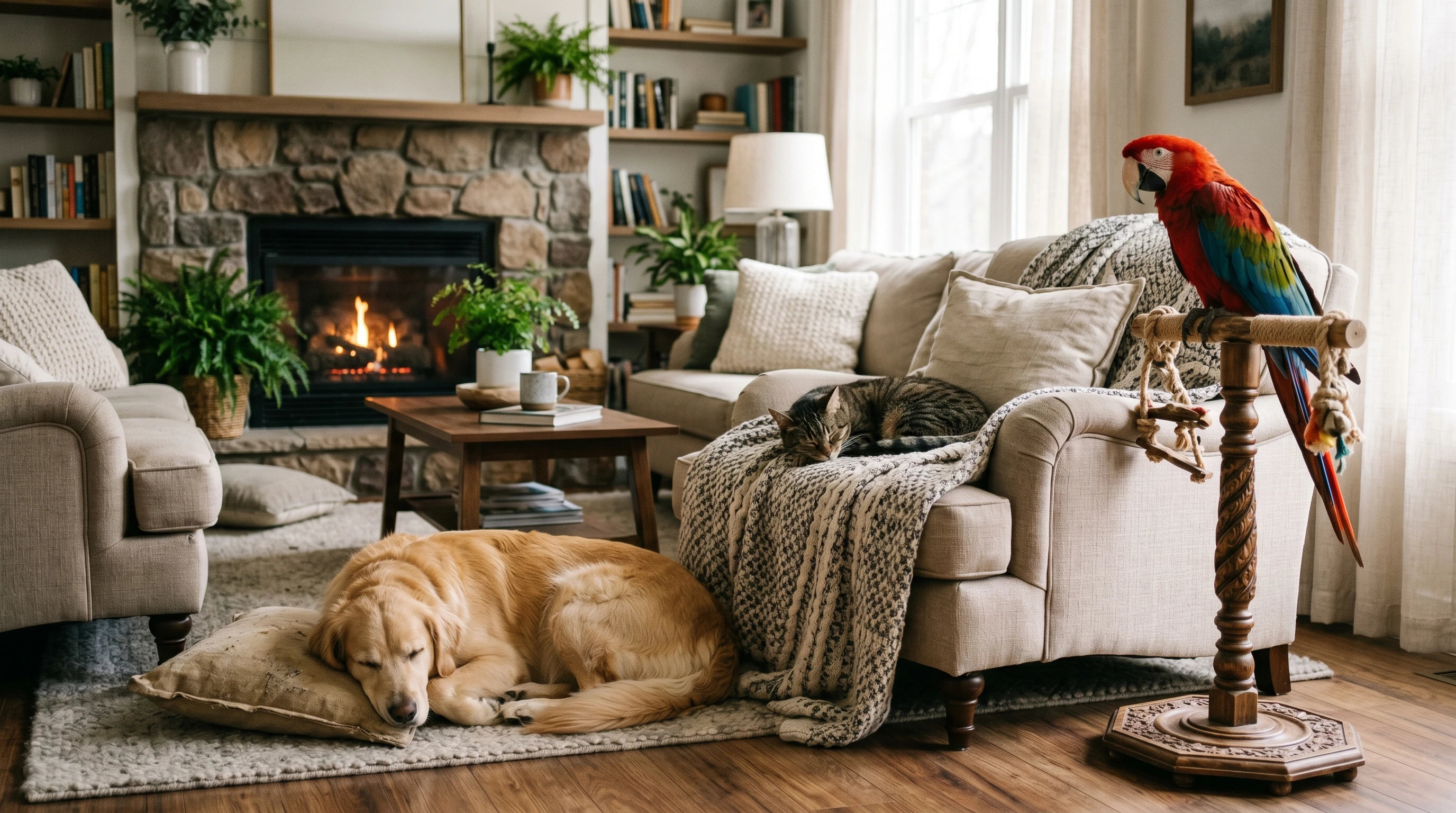
 Noisy pets can make any home a bit of a challenge, especially when you’re trying to relax, work from home, or keep your neighbors on good terms. Whether you’re dealing with a dog that barks at every sound, a cat that meows all night, or even a more exotic pet that loves to chirp, squawk, or screech, the frustration is totally real. There are practical steps that help quiet things down, and they work for all kinds of pets, not just cats and dogs.
I have lived with loud animals before (my rabbit used to be as loud as physically possible when I was trying to sleep), so I get how tiring it can be. It’s helpful to understand why pets vocalize a lot, but training them to be quiet is a lifesaver (with patience and the right methods). This guide breaks down all the ways you can encourage quiet behavior while making sure your pet still feels heard and appreciated.
Understand Why Your Pet Is Noisy
Pets rarely make noise just to bother us. Usually, it’s because they’re bored, anxious, want attention, are hungry, or sense something unfamiliar. Dogs tend to bark at people passing by, strange sounds, or out of excitement. Cats may meow for food, affection, or when they want in or out. Exotic pets like birds, ferrets, or guinea pigs may make sounds due to stress, boredom, or simply because they are moving around in their environment (my rabbit is loud because his playpen is situated on vinyl flooring and his nails grow quite quickly).
- Boredom or lack of stimulation: Pets that don’t have enough to do often act out vocally. Without regular activity, they may become louder as a way to get your attention or stimulate themselves.
- Separation Anxiety: Dogs or birds especially may bark or screech when you leave the house. This is their way of expressing insecurity or distress at being alone.
- Hunger or discomfort: Meowing at the food bowl or squawking in the cage can be a sign your pet needs something. Make sure food, water, and comfort needs are always handled to minimize these types of sounds.
- Medical reasons: Sometimes, a sudden change in noise level can signal health concerns, so checking with a vet is a good call if it’s out of character. If the noise pattern changes suddenly or seems excessive, a quick vet visit can rule out pain or illness.
When you get a handle on what’s fueling the noise, you’ll be in a better spot to address it. Observing your pet closely and keeping a little journal on their noise patterns can help you spot timing or triggers, like certain people passing by or changes in the home.
Tailor Solutions for Your Type of Pet
Different pets need slightly different approaches, but lots of the basics are the same. Here’s how I break it down for dogs, cats, and exotic pets. By knowing your animal’s natural behaviors, you can really make a difference in your noise-reduction plan.
For Dogs
- Exercise: Tired dogs bark less. Walks, games, and mental puzzle toys go a long way. Try to fit in at least two sessions of proper play or adventure daily. Physical activity, like a trip to the dog park, really helps burn off extra excitement.
– Alternative Suggestions: If your dog is still brimming with energy after you spent all of the time that you can afford to spend with them, seriously consider further options. Outdoor runs, pet sitters, fetch machines, another dog to play with, a fenced in yard — just to name a few. For this issue, barking is just the fruit, not the root. Even if you manage to somehow calm the noise, your dog is still pent up and unhappy. - Attention-seeking barking: If your dog barks for your attention but isn’t in distress, completely ignore them until they quiet down, then immediately offer petting or play. Don’t give in halfway; consistency is everything here.
– Teach the “quiet” command: This ideally works for any dog in any situation as long as you are consistent and patient. Wait for your dog to stop barking and calmly say “quiet.” Reward with a treat. Keep repeating so your dog associates the word with being quiet. Some people use a hand signal as well to reinforce the calm expectation. The “quiet” command can be taught just like any other command. Visit my post on Clicker Training to understand the mechanics for training any animal anything.
– And the #1 Rule: Don’t shout. Yelling at your dog to stop barking often sounds like you’re barking with them. Speak calmly and clearly. Lowering your own voice and body language helps your pet match your own calm energy.
For Cats
- Feed and play on a routine: Cats meow less if they know when to expect food and attention. Routine is comforting and lets them know what to expect throughout the day.
- Interactive play sessions: Use wand toys or laser pointers to burn off energy, especially before bedtime if you have a nighttime yowler.
– Alternative Suggestions: If this doesn’t work or you don’t have enough time to play with your cat, you need to find a way for them to burn off energy. Dogs are given walks and opportunities to release pent up energy, but cats are often labeled as low maintenance and left in the house with very little to do all day. Cats need a lot of exercise and stimulation (which they would have found outdoors, but your cat is likely indoors). Outdoor runs, pet sitters, feather toys, moving toys, puzzle toys, another cat to play with, free roam of the house, and walks are all proven, effective ideas to release your cat’s pent up energy. Check out my post on how to leash train your animal to have real, enjoyable walks with your cat. - Don’t reward nonstop meowing: Wait until your cat is quiet to feed or pay attention, so they don’t learn that meowing always gets results. If you respond only when there’s quiet, they’ll soon catch on.
– Alternative Suggestions: If your cat is a talker and they meow just for the fun of it, train them the “quiet” command. This is 100% doable and cats are much more intelligent than you might think. Visit my post on Clicker Training to understand the mechanics for training any animal anything. - Check for health problems: Excessive meowing in older cats can be a sign of health issues, including thyroid problems or hearing loss, so don’t dismiss a sudden increase in sound.
For Exotic Pets
- Birds: Parrots, cockatiels, and other birds need social interaction, toys, and things to shred. Cover the cage at night, but don’t cover it during the day; that stresses them out. Treats hidden in toys can keep birds busy for hours.
– Ensure that you find a way to give them fly time. Most birds were made to fly (unless you own an ostrich). Keeping them in a cage with no place to fly is just as cruel as keeping a dog in a crate with no room to run. Both birds and dogs are animals. Neither is better than the other or deserves more opportunities. - Small mammals: Rats, ferrets, rabbits and guinea pigs like hiding spots and chew toys. Regular out-of-cage play limits noisy cage rattling or squeaks. Set up little tunnels and hideouts where they feel safe and entertained.
– Also seriously consider training your pets. I’m working on training my (previously mentioned) rabbit Aiden using beginner clicker training. They are much more intelligent than you might want to believe. I just can’t emphasize this enough: My post on Clicker Training is crucial to understanding the mechanics for training any animal anything. - Reptiles & others: Most reptiles are quiet, but some geckos do chirp. Give them the right environment so they aren’t stressed and making noise at night. Proper lighting, warmth, and hiding places reduce stress-related sounds.
– Make sure that you do spend time with them and bond. Most animals do not want to be alone, even if they seem to act like it. They crave companionship, although not necessarily in the form of petting or vigorous exercise.
Troubleshooting: When Nothing Seems to Help
Try Environmental Adjustments
- White noise machines: These drown out outside noises that trigger barking or meowing. Fans or background music can also help mask strange sounds.
- If you absolutely must: You can temporarily block windows. If your dog goes nuts at everything outside, try covering lower windows or using privacy film. This removes visual triggers like squirrels or people walking by.
– However this is a good way to temporarily reduce distractions while you train your dog the “quiet” command. This is a must if you find yourself needing to cover the windows. Just like we raise children with manners, we should raise our animals with manners too. Believe it or not, they have the mental capacity to learn when done correctly. Life can be quite unbearable with ill-behaved animals, so training them to have good manners is a must. - Soundproofing: Rugs, curtains, and soft furnishings help muffle echoes and external sounds that could rile up your pet. Even adding a thick bed or cozy den space can make a difference if your home has hardwood or tile floors.
Increase Enrichment
- Food puzzles: Encourage pets to work for their food with treat-dispensing toys or puzzle feeders. Simple homemade puzzles with paper towel tubes or muffin tins can keep pets busy!
- Rotate toys regularly: Offer new chew or play items to keep things fresh and interesting every few days. Hide a favorite toy and let your pet track it down as a fun challenge.
Use Calming Aids (If Needed)
- Pheromone diffusers or sprays: These can help calm cats and sometimes dogs, like Feliway for cats or Adaptil for dogs.
- Natural supplements: Some pets respond to calming treats or supplements, but chat with your vet first. Products with ingredients like Ltheanine or chamomile may give a boost to your routine.
I’ve found that mixing up the environment and adding new activities works magic for bored or nervous pets. No need to buy everything at once; try one or two small changes and see what works. Sometimes, a simple cardboard box or a new spot to perch makes all the difference.
If noise continues despite efforts, it could be worth checking your own stress levels. Pets often pick up on our moods, so keeping things as calm as possible for yourself can rub off on them in a positive way (The best way I’ve found to calm my nerves is to spend some quality time in prayer and self-reflection).
Consistency Is Super Important
Pets thrive with consistency, and mixed signals make training tough. When you’re trying to cut back on noisy behavior, stay patient and stick to a routine. If you ignore barking sometimes but give in other times, your dog or cat learns to be persistent.
- Set boundaries and enforce them the same way, every time. Consistency teaches your pet the rules without confusion.
- Reward any quiet moments instead of reacting to whatever noise. Positive attention, treats, or play during calm periods shows your pet what works.
- Clue in other family members so everyone uses the same approach. Make a family game plan so no one accidentally teaches bad habits. Just one missing link in the chain can destroy any results you might’ve had.
Quick Questions Pet Owners Ask
My dog barks when left alone. How do I help?
Break up departures into small steps. Try leaving for just a minute, returning before barking starts, and gradually increase the time (this is a form of “quiet” training).Chew toys or food puzzles keep them busy. Sometimes, a pet camera helps you check what’s really happening. If barking keeps up, consider getting a pet walker or neighbor for company a couple of times a week.
My cat meows all night. What works?
- Extra playtime in the evening burns off energy. Try interactive toys or a short laser pointer session before bed.
- Feed your cat just before your bedtime so they aren’t waking you up for food. A small, late-night meal can help a lot.
- Ignore nighttime noise (as tough as it is). Don’t get up, or they might try harder next time. Use earplugs or a sound machine for yourself if necessary.
- Use the “quiet” command! Training good manners works wonders. Although it takes time and energy, it pays off miles in the long run.
Can I use antibark collars or noise deterrents?
I don’t recommend anything that makes pets uncomfortable or scared, like shock collars or harsh noise devices. They might stop the barking short-term, but they don’t address the root and often make anxiety or fear worse. Focus on training and enrichment first, and ask a behaviorist if the problem continues.
Are some pets just noisier than others?
Definitely. Some dog breeds (like Beagles) and some parrots are just more vocal by nature. The key is focusing on manageable improvements rather than expecting perfect quiet.
Keep Your Home Quieter: Next Steps
- Check if your pet’s needs are being met (exercise, fun, food, and attention). Daily routines and scheduled play break up the monotony and help manage energy levels.
- Work out what triggers your pet’s noise and make a small change right now, even just moving a crate or adding a new toy can help. Noticing patterns is half the battle—write them down if it helps.
- Stick to your plan and don’t reward noisy behavior. Consistency goes a long way. Remember that it may take a couple of weeks to really see steady change.
Thanks for reading, and I wish you the best of luck on your way to a quieter home. If you have any questions, concerns, or need clarification on any of my points, just drop a comment below. 😉